Beyond Business Cards: Authentic Networking at Conferences
Networking at conferences can feel overwhelming, regardless of your industry. With countless professionals gathered in one space, a well-thought-out approach can transform the experience from merely swapping business cards into building lasting, meaningful connections. Below are the strategies I personally use to prepare for a networking conference and cultivate authentic relationships.
1. Set Clear Goals
Before attending, define what you want to achieve. Are you looking for job opportunities, mentorship, industry insights, investors, or collaboration partners? Having a clear goal helps you focus on the right conversations and connections while maximizing time efficiency.
2. Research
Research speakers, panelists, and attendees if possible. Follow them on LinkedIn or Twitter and engage with their content before the event. This makes it easier to start conversations and demonstrates genuine interest.
Two weeks before a conference, I purchase a bundle of index cards and create portfolios on key speakers, panelists, and attendees. Using Microsoft Word, I format the dimensions to match the size of an index card. Next, I conduct my research on the keynote speaker using the index card template below.
On the front side, the left-hand margin should include the person's picture, full name, and title. On the right-hand margin, include their residence, education, expertise, work experience, and interests & hobbies. Identifying a person's interests and hobbies makes it easier to create an authentic connection, especially if you share commonalities.
The back side of the index card should remain blank until the date of the conference. While a speaker is giving a presentation, I typically create bullet points highlighting key insights. If I have the opportunity to interact with that person, I make a note of it on my index card and jot down the topics of discussion for future reference.
When you have a one-on-one opportunity to engage with a key contact, wait until the conversation is over and they have turned away before writing down the key details of your discussion. Additionally, take a moment to self-reflect and be honest with yourself. We are all human and make mistakes; however, mistakes provide opportunities for self-growth and improvement—so long as we put our egos aside.
Self-Reflection Questions:
Did the conversation flow naturally, or was it awkward?
How did I feel in the presence of the other person?
Were there any shared commonalities?
Was I actively engaged with the person I was speaking to?
Did I dominate the conversation, or did I give the other person room to speak?
How to Conduct OSINT Research:
You might be wondering: How do I acquire all this information?
The most effective strategy I use is OSINT (Open Source Intelligence). OSINT involves collecting and analyzing publicly available information from sources such as websites, social media, and public records to gain valuable insights. Many people overshare their personal information online, making OSINT research relatively simple. However, individuals with smaller digital footprints may require extra time and effort to research.
Once you find a person’s LinkedIn profile, it becomes easier to expand your research outward using their name, email, or other identifiers. Additionally, artificial intelligence (AI) can be a useful tool for quickly locating other social media profiles, websites, news articles, and more where the person’s identity may be mentioned. However, always verify the accuracy and legitimacy of your research, as AI can sometimes generate misleading or incorrect information.
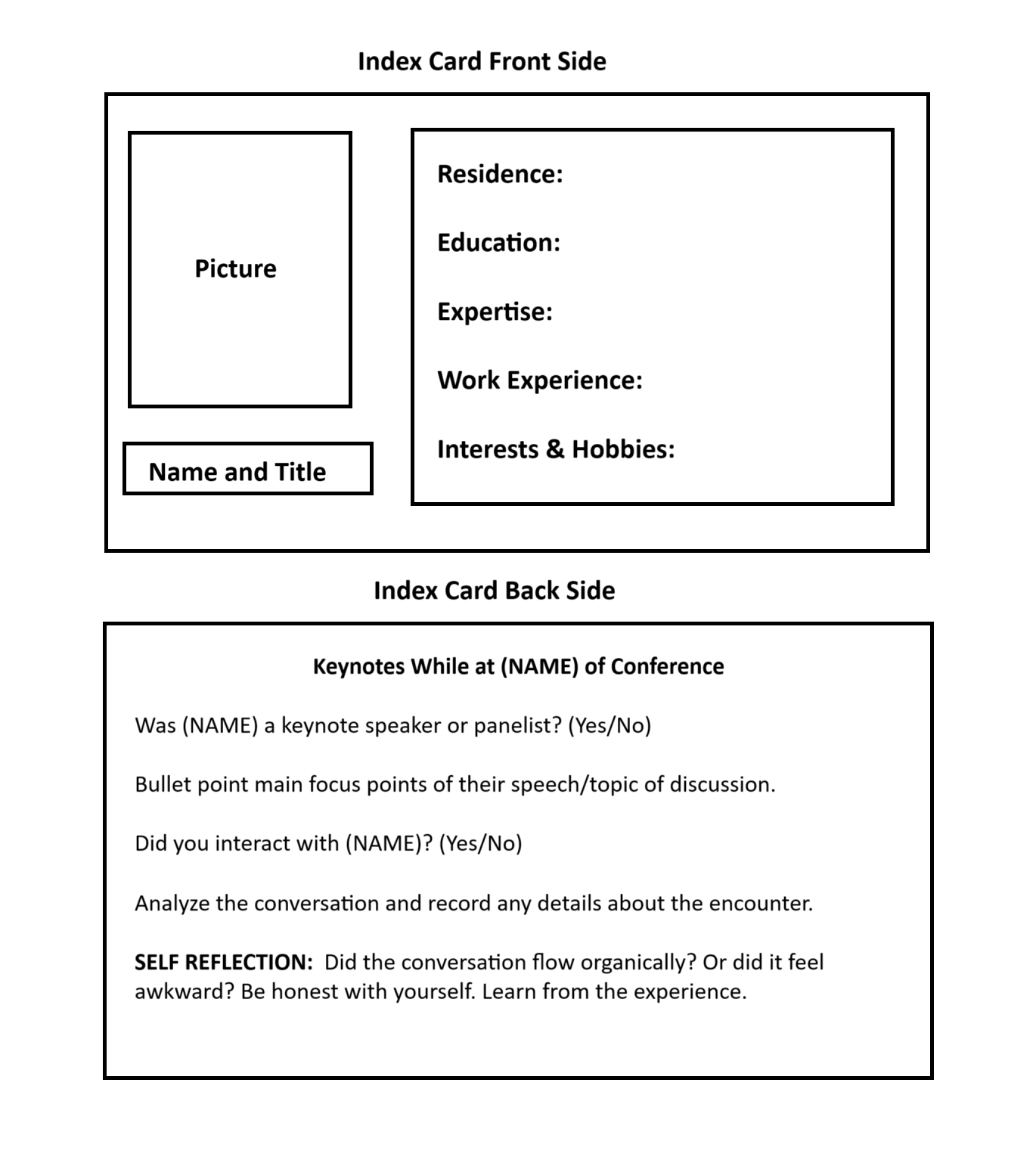
My Personal Networking Index Card Template
3. Perfect Your Pitch
Be ready with a brief and compelling introduction about yourself. Share who you are, what you do, and why your passionate about your field. Make it natural and adaptable to different situations.
4. Engage in Meaningful Conversations
Instead of generic small talk, ask insightful questions related to the event or speaker topics. For example:
- What are your thoughts on the latest trends in [name of topic]?
- What inspired you to become a [job title]?
- What’s the most valuable lesson you’ve learned in your career?
- What's your favorite thing about working at [company's name]?
- What's the most unique thing about your company?
- What are the most rewarding and challenging aspects of your work?
- What advice would you give to someone just starting out in this field?
People appreciate genuine curiosity, and it sets you apart from those just collecting contacts.
5. Leverage Workshops & Panels
Participate in discussions during panels, workshops, and Q&A sessions. Speaking up not only helps you get noticed but also provides natural opportunities to continue conversations afterward. Furthermore, asking questions presents the opportunity to expand your knowledge and and foster self-growth.
6. Be Present & Authentic
Give your undivided attention to the person you’re speaking with. Avoid using your phone while engaging in conversation to demonstrate mutual respect. Show enthusiasm, listen actively, and resist the urge to immediately pitch yourself. Allow the conversation to flow naturally whenever possible. Being overly aggressive can make the interaction feel awkward or make you come across as an opportunist. People remember how you make them feel more than the words you say.
7. Use Social Media Strategically
Post updates about the conference, tag speakers, and use event hashtags. Comment on others’ posts and engage in discussions online to reinforce connections made in person and establish yourself as a thought leader in your field of expertise.
8. Follow Up Promptly
After the conference, send personalized follow-ups via LinkedIn or email. Use your index cards to refresh your memory and reference key points from your conversations.
A good follow-up message could include:
A thank-you note for their time
A reference to a specific discussion you had
A relevant article or resource they might find useful
A suggestion to stay in touch or schedule a follow-up call
A question about any upcoming events they plan to attend
9. Offer Value & Stay in Touch
Networking isn’t about self-gratification or what you can get—it’s about mutual benefit and respect. Share insights, make introductions, and support others in their goals. Relationships grow when nurtured over time.
Final Thoughts
Networking at conferences is about quality over quantity. By being intentional, doing your research, engaging authentically, and following up, you’ll build lasting professional relationships that can open doors throughout your career.
Next time you attend an event, approach it with curiosity, confidence, and a willingness to connect beyond the surface